This story comes from way up in Canada’s north. The people who live there call themselves Naskapi, which means “the people beyond the horizon.” Like many native peoples, for many generations the Naskapi told their stories with poems and songs, rather than writing them down. Their tales took place in a time when the animals, people, and spirits lived in harmony, sharing the land, sea, and sky, and were able to communicate with each other. Even though I’m very old, your storyteller didn’t live at that time, so I’m not exactly sure how the story went. But I’m going to do my best to tell it to you.
This is a story of two spirits. Kanipinikassikueu is a name meaning ‘Caribou Master.’ In the Naskapi homeland, caribou roam in large herds and the people there need them for food, tools, and clothing. The story goes that long ago, a man so loved the caribou that he went to live among them. He married one of the does, and was transformed into Kanipinikassikueu. From that day on, he was responsible for providing the Naskapi people with enough caribou to survive.
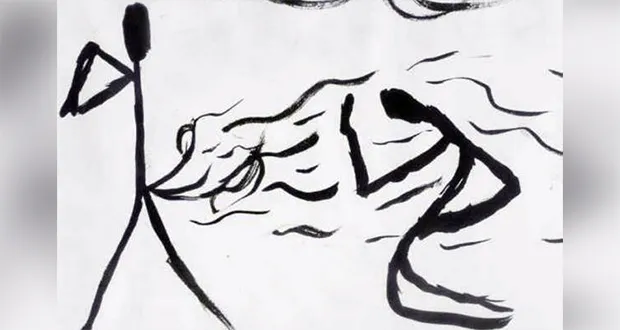
Matshishkapeu was an even more powerful spirit: some say the most powerful spirit of all. His name means–try not to giggle–the Fart Man. Do you know why he was so powerful? The Naskapi people say it is because Matshishkapeu was always everywhere at once: he went with the people on the hunt and followed them (hee, hee) into their tents. Whenever he ‘spoke,’ everybody was happy because it meant Matshishkapeu was delivering to them an important message. Often a wise person was asked what the message meant.
This is the story of when Kanipinikassikueu and Matshishkapeu met.
Kanipinikassikueu was in a bad mood. He had done his job providing the people with plenty of caribou for meat and hides. And even though there were more caribou being born every season than he gave the people, he became greedy. He decided the people would have no more caribou.
At first, the Naskapi hunters weren’t worried: hunting was difficult, and sometimes you came back with nothing. But soon their children cried of hunger and cold. No one could sew for lack of needles, and there were not enough annuraaqs (coats) and moccasins (boots) for everyone. The hunters asked Kanipinikassikueu to change his mind, but he was stubborn and refused.
It was then that one hungry little child let out a whispered, unwarmed fart. The wisest elder was called upon, and they told everyone that Matshishkapeu was going to speak to Kanipinikassikueu. Everyone rejoiced because they knew how powerful Matshishkapeu was.
Matshishkapeu approached Kanipinikassikueu and asked him to release his grip on the caribou and let the Naskapi hunt again. But Kanipinikassikueu refused. Matshishkapeu then ordered Kanipinikassikueu, warning him that he could use his power to force him to obey. But again Kanipinikassikueu refused. “So be it,” said Matshishkapeu, and without Kanipinikassikueu even noticing, he cursed the Caribou Master.
The next morning Kanipinikassikueu went to poop, but could not. Try as he might, he could not release even the tiniest fart. Soon his stomach hurt so much, it felt like it was tied up in knots. He cried and tried, tried and cried, but nothing came out. He called out to Matshishkapeu, who, because he was always around, appeared immediately. Kanipinikassikueu promised to relent and let the Naskapi people hunt again, if only the Fart Man would end his pain. Matshishkapeu agreed, and ended the curse.
Farts may seem tiny and unimportant, but they can be pretty powerful, don’t you think?”